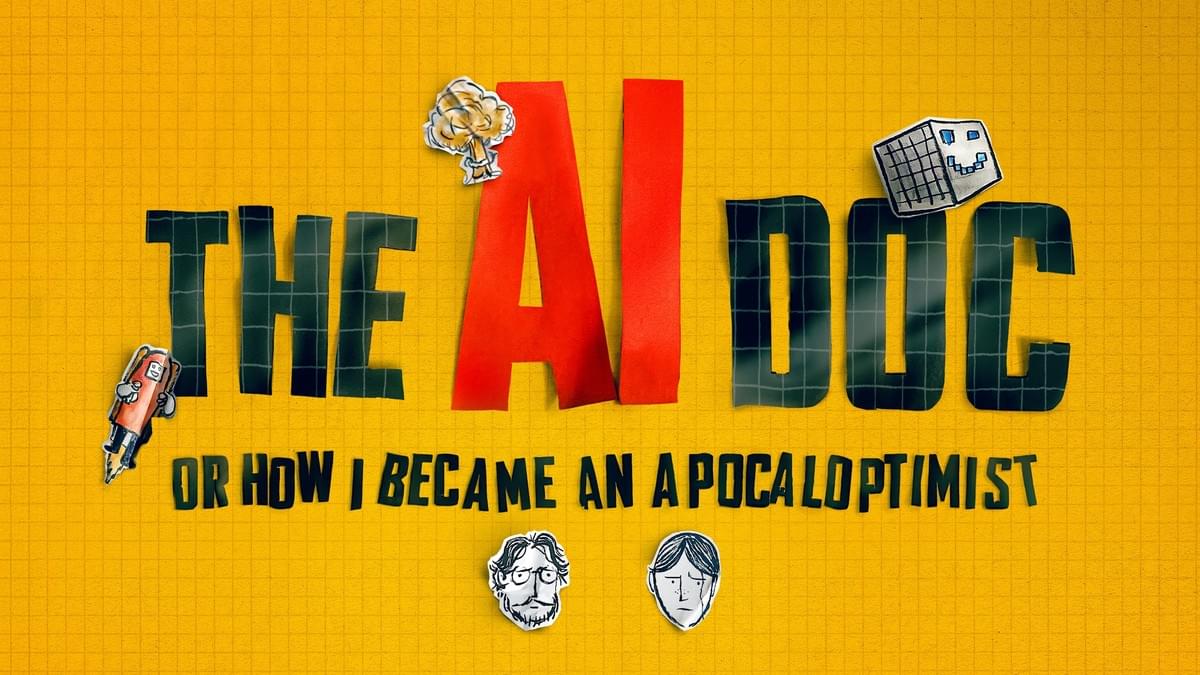
I watched The AI Doc: Or How I Became an Apocaloptimist (2026), directed by Daniel Roher and Charlie Tyrell. It follows Roher—an expectant father—as he interviews AI executives, researchers and critics about the world his child may inherit. Netflix.
My read: it’s a worthwhile conversation-starter, but not a verdict on AI. Who better to ask than AI's friendliest, ChatGPT?
The most useful distinction is:
- Present, evidenced harms: convincing scams and deepfakes, unreliable answers, discrimination, privacy loss, cyber misuse, workplace disruption and power concentrating in a handful of companies.
- Plausible future systemic harms: destabilised labour markets, widespread manipulation, autonomous weapons and dangerous systems being deployed into critical infrastructure.
- Existential “loss of control”: serious enough to investigate and prepare for, but profoundly uncertain—not something science has established will happen.
The broad 2026 international scientific assessment reaches a notably calmer conclusion than the film’s most frightening moments: current systems don’t possess the combined capabilities needed to escape human control, although relevant abilities are improving and the future risk remains unusually difficult to estimate. The same report says several less cinematic harms are already supported by strong real-world evidence. International AI Safety Report 2026
A few cautions when interpreting the film:
- Interviews with Sam Altman, Dario Amodei and other builders provide valuable information, but these people also have commercial and institutional interests.
- Extreme optimism and extinction warnings make dramatic television; the large, uncertain middle is harder to portray.
- Production took almost three years during a rapidly changing period, so it is necessarily a snapshot. Associated Press
- Several reviewers thought it raised important questions but didn’t adequately test competing claims or address mundane present-day impacts. RogerEbert.com, TheWrap
So I’d retain the film’s “apocaloptimism,” but interpret it as: don’t dismiss the severe possibilities, don’t confuse possibilities with predictions, and don’t become paralysed. AI’s effects will depend greatly on who controls it, where it is deployed, what permissions it receives, and what safeguards society demands.
And to connect this with your earlier question: simply prompting an AI to “end the world” cannot unleash an autonomous catastrophe. The credible concerns involve people or institutions connecting increasingly capable systems to consequential tools, infrastructure and decision-making without adequate oversight.